
Importance of Google Business Profile for Local SEO

Understanding Google Business Profile If you want your local business to get found by more people, you need to have a Google Business Profile. This will help your business profile appear in more places online. Your business information will also be easy to see in the places people often look for it. Many people use Google Search and Google Maps when they look for local businesses. They compare several options and quickly pick what they want. A Google Business Profile is not just a way to list your business. It is a simple and effective way to boost your local SEO. It can also strengthen your online presence and help more people find your business when they need it. A Google Business Profile is a free tool. You can use it to control how your Google business looks in search results. People will see important business information, such as your business name, contact details, and location. This helps potential customers find your business. It also makes them trust you more. For many business owners, this is a good, easy way to get started with local SEO by providing clear details like your business name, address, phone number, and hours, which help search engines and customers find you more easily. What is Google Business Profile and Google My Business? Google Business Profile is the new name for what people used to call Google My Business. If you have a business, your business name and information will appear in Google Search and Google Maps. This can help small businesses be found by people nearby. A Google Business Profile can make it easier for many people to find your business when they search for it on Google Search or use Google Maps. When your listing is ready, people can see your contact information, business hours, and physical location all in one place. This helps them get what they need fast. It makes them feel good about your online presence. With this, search engines can link your services to local search queries. Because of that, more people will find you when they use local search or look for something near them. This is important because a well-maintained Google Business Profile with accurate details helps your business rank higher in local search results and attracts nearby customers more effectively. Key Features of Google Business Profile for UK Businesses For UK businesses, a business profile gives you real tools to help with your online presence. It lets local customers find you fast. Your main details show up for people in Google search. Most of the time, they see this before they even get to your website. This can be a big thing when someone wants to buy or book with you. Some of the main features include: These features help your business profile look real and build trust with people who live near you. When local customers see accurate information and new updates on your business profile, they feel your business is active and good to work with. This is why you should set up a Google Business Profile if you want more local customers to find your Google business and help it grow. Why Google Business Profile Matters for Local SEO A Google Business Profile is key for local SEO. It lets search engines link your business with people nearby. When people type in local search queries, Google looks at things like how good your business profile is, how close you are, and how right the listing is. A good business profile will help you show up more often in local search results. A strong Google Business Profile can make sure your business gets noticed in search results for local search queries. It lets local customers find your services without any extra work. If you rank higher in local search, you will get more clicks. You will also get more calls and more people coming to your shop or office. When you add this to your digital marketing and search engine optimisation plan, it can help your business grow in your area. The next parts will show you how this can work for you. Boosting Local Search Visibility in the UK In the UK, many people use their phones to look for things or services near them. A Google Business Profile helps your business show up in local search queries. Around half of all search queries online are for local search. More online visibility means people can find you when they need you the most. A good profile improves visibility by showing: This is why your profile is important for local search results. It shows Google where you work and what you offer. If you want to get customers from your area, being in the search results and on maps helps a lot. It can turn local search into people visiting and asking about your business. How Google Pack Works with Local SEO The Google Pack is a set of local business listings. You can see these at the top of search engines when you type in local words. Your Google Business Profile helps you get on this list. For business owners, this shows how local seo is a big part of their digital marketing and how people find them on search engines. Here is a simple view of how it works: Google Pack Factor Why Why It Matters for Local SEO Business location Helps Google match your listing to nearby users Keyword relevance Connects your services to local search terms Review volume Builds trust and can improve visibility near the top Profile completeness Gives search engines clearer business information This is important because when a business is close by, people can find it more easily. A lot of reviews and the right keywords also help your business show up higher. If the details in your profile are correct and you update it often, you will have a better chance to show up in the Google Pack. This lets you get noticed before other
Understanding Niche & Topical Keywords

A Business Guide to Understanding Niche & Topical Keywords Are you trying to get more customers online? Many small businesses can feel it is hard to stand out in this busy digital world. A smart search engine plan can really help you. A good search engine plan can help your small business show up when people look for your services. To do this, you need to focus on keyword research and local SEO. These things put your work right in front of the people who look for something you offer. This guide shows you how to find the best keywords for your work. It can help you use local SEO the right way. You will learn how to grow in a steady way. You can meet more local customers and help your small business stand out in search engine results. Niche keywords are special long phrases that your target audience uses when they are about to buy something. These phrases are not broad, so there is less competition for them. This helps your business show up higher in the search results. A good SEO strategy begins with smart keyword research. When you find the niche and topical keywords, you can make relevant content. This content will answer the questions your customers have. Using this way can help more of the right people get to your website. It will also help your brand grow and be seen as a leader in the field. Let’s see what these words can mean for your business. Defining Niche and Topical Subjects in SEO In SEO, the word “niche” means a small, special part of a bigger market. A niche keyword is a very clear search word or phrase people use to look for a product or service in that small part. For example, instead of saying “shoes,” someone might search “vegan leather running shoes for women.” People who use these words are fewer, but they are often ready to buy. Topical subjects are wide themes or groups that include your niche keywords. When you make content using these topics, you help the search engine see what your website knows and does best. A good SEO strategy uses both types of keywords. The topical keywords make up the base of your site, and the niche keywords help you get visitors who want something specific. For local businesses, local SEO is very important. This part of SEO helps you get found online by people who live close to you. When you make your site better for local searches, your business will show up in front of people who are nearby and want to visit or buy something. This is a key tool for small business growth. The Importance of Targeted Keywords for Small Businesses For a small business, it can be hard to go up against big companies for broad keywords. This is why doing strong keyword research is needed. If you pick keywords that are more specific and focus on a niche, you get to bring in the right target audience. These are people who want what you have. This way, your small business has a good chance to get a real competitive edge. Good search engine optimisation is not about getting any people to your site. It is about getting the right people. When you use the best niche keywords for your local business, you reach potential customers who are ready to buy. This helps you get higher conversion rates and gives you a better return on the money you spend for marketing. So, how can you find the best niche keywords? Local SEO – Boosting Visibility in the UK Did you know that a lot of people use their phones for mobile searches near where they live? Local SEO helps your business show up in these search results. It makes sure your business can be seen in local search results, which is important for local businesses that want to connect with people in their own area or community. When people use Google Search to look for a service “near me,” a strong local SEO strategy helps your business show up at the top. This is important because it brings more foot traffic to your door and brings in new customers who want to buy something. Let’s see why local SEO is so important for growth and what things can help you rank higher. Why Local SEO Matters for Business Growth Local SEO is a smart way for small businesses to grow. It helps you connect with local customers when they need your service the most. Many people use search engines to look for businesses near them. If you have good online visibility for local searches, you get more phone calls, more clicks on your website, and more people visiting your business. This approach helps small businesses be found online by customers in their area. Getting better search rankings in your local area can give you real results. A lot of people look for a local business on their phone and visit that place in a day. This is why local SEO is one of the best ways in digital marketing to help boost sales in the real world. Effective local SEO strategies help you: Key Factors Google Uses to Rank Local SEO Results When you do a Google search with local intent, the search engine thinks about a few important things to give you the best results. If you know these factors, you can help your local search ranking and build a strong online presence. It is not only about which place is the closest. It is about which business the search engine finds to be the most relevant and trustworthy. Google’s local ranking algorithm looks at three main things: relevance, distance, and prominence. Relevance is about how well your business profile matches what people search for. Distance means how close your place is to the person doing the search. Prominence is how well-known your business is. This includes things like online
Long Tail keywords & Your Keyword Strategy

Understanding Long Tail Keywords In digital marketing, knowing your target audience is very important. It helps you grow your organic traffic and can help with conversion rates. Long tail keywords are helpful for this. A good SEO strategy is not only about search volume or picking main words. It also means trying to use the phrases that people type in search engines. When you work on your keyword strategy and put long tail keywords into your content strategy, you can make your website better. Your site will show up more in search results. This way, you reach people who want what you offer. It will help you get more search traffic and bring in the right visitors to your website. Long tail keywords can be the secret to a good keyword strategy. These are words or phrases in a search that show a person’s specific search intent. Even though each one may get less search traffic, together they can help you get more organic traffic. Their real power is clear when you use many long tail keywords for your site. When you focus on these specific queries, you can make content that speaks directly to your target audience. If you use a keyword tool, you can get keyword ideas and suggestions to guide you. This helps you match your content with what people type into search engines. That means you can show up more in search results when they look for the things you talk about. Now, let’s see what makes these keywords work so well. Definition and Characteristics Long tail keywords are long and very detailed search phrases. People use these in search engines when they want to find something special or unique. A main keyword is more general, but a long tail keyword gives more detail. It often has three or more words. This detail is what makes these keywords stand out, and it is a main reason why long tail keywords matter for SEO. These keywords are helpful because they show what people really want in their search. When someone types a special question, they are often ready to buy or act. The good part is the keyword difficulty is not high for a long tail target keyword. So, you can get your page in search results more easily. You also don’t have to fight big sites in this case. This is a smart way to use search intent and long tail words. Using long tail keywords as part of your keyword strategy helps make your content more relevant. This way, you do not only get any organic traffic. You get people who are really interested in what you have. That is what search engines want to see. Long tail keywords are a big part of lasting growth. How Many Words in a Typical Long Tail Keyword? When it comes to long tail keywords, there is not a hard rule about how many words they must have. Most of the time, long tail keywords use three or more words. The main thing about these words is not how many there are, but how much detail they give. These long tail keywords show a user’s specific search intent and make it clear what people want to find. Think about it like this. A search query like “shoes” is very broad. But, if you type something like “best running shoes for flat feet,” that is a long tail search query. This kind of phrase tells us much more about what someone needs. When you use more words, you make the search more clear. The search volume might go down, but the people who find you are more likely to want the shoes you talk about, especially if they have flat feet or want the best running shoes. Your keyword strategy needs to include these longer phrases. A one or two-word search query may get a high search volume, but there is a lot of competition for it. A keyword phrase with more words does not have as much competition. It also helps you reach people who know what they want. That means these visitors are more valuable for your website. Common Types of Long Tail Keywords Long tail keywords can appear in many ways. Each type shows a different kind of search intent. When you understand these types, you can get better keyword ideas for your content creation. This helps you reach your target audience in a good way. You can find these types of keywords by checking keyword suggestions in the search bar or using keyword research tools. This makes keyword research easier and helps you know what people want to see. Some normal kinds of long tail keywords will show up in search engine results. Knowing about these categories can help you make a strong list of keywords. A keyword tool can show you more options. This helps you get more of the right organic traffic to your site. The Difference Between Long Tail and Short Tail Keywords The main difference between long tail keywords and short tail keywords, which are also called head keywords, is found in how long and clear they are. A short tail keyword is a basic search term. It is often just one or two words. A long tail keyword is a longer phrase. It is more detailed and clear about what you want. This difference affects your keyword strategy. Short tail keywords get a lot of search results. But the keyword difficulty for them is also high. So, there is a lot of competition. On the other hand, long tail keywords get fewer search results. These have less keyword difficulty and are not as hard to use. You can reach your target audience better with long tail keywords. This can also help you rank higher in search results. Next, we will look at some clear examples. Examples of Long Tail Keywords vs Short Tail Keywords To really understand this idea, let’s look at some clear comparisons. When you see short
Understanding Local SEO & its Role in Business

Local SEO: Designed to Help Businesses Connect Local SEO is designed to connect businesses with customers who are searching in a specific place or with a local intent, such as “plumber in Leeds” or “best café near me.” Unlike broader SEO, which tries to rank a website for general keywords regardless of location, Local SEO emphasizes signals that tell search engines where the business is and who it serves. In practice, that means optimizing both the website and the business’s presence across maps, directories, reviews, and local listings.[3][1] A useful way to think about it is this: traditional SEO helps people find your website, while Local SEO helps people find your business in their area. For many companies, the goal is not just website traffic, but actual visits, calls, bookings, and inquiries from nearby customers.[2][1][3] How Local SEO Works Search engines try to show results that best match a user’s intent and location. When someone searches for a local service, the engine evaluates where the searcher likely is, what they are looking for, and which businesses appear most relevant and trustworthy in that area. That is why proximity matters so much: a business closer to the searcher may be favored, especially for searches that imply immediate or nearby service.[4][1][2] Local SEO influences visibility in the local pack, which is the map-based group of listings shown near the top of many location-focused searches, as well as in Google Maps results. Strong Local SEO helps a business become eligible for those features by making its location, category, service area, reviews, and authority easier for search engines to understand. For example, a search for “emergency electrician near me” may surface a map pack first, because the search engine sees local intent and expects the user wants a nearby provider quickly.[1][4][3] Who Benefits Most Local SEO is especially valuable for businesses that depend on customers in a specific geographic area. That includes local service providers like electricians, plumbers, roofers, dentists, lawyers, and auto repair shops, because people usually choose them based on proximity and convenience. Brick-and-mortar businesses such as restaurants, salons, gyms, retail stores, and clinics also benefit because customers often decide where to go based on map results, hours, reviews, and directions.[3][2][1] Multi-location businesses gain a lot from Local SEO too, because each branch can compete in its own local market rather than relying on one generic website presence. Franchises, healthcare groups, hospitality brands, and regional retailers often use location pages and local listings to make each site or branch visible in the correct area. Even organizations that do not rely on walk-in traffic can benefit if they serve a defined region or want to increase local trust and leads.[5][2][3] Business Value & Visibility The biggest value of Local SEO is that it puts your business in front of customers at the moment they are ready to act. Local search visibility can drive more calls, form fills, booking requests, store visits, and foot traffic because local searches often carry strong purchase intent. It also supports trust, since searchers tend to rely on reviews, accurate business information, and map visibility when deciding whom to contact.[2][1][3] Local SEO matters even more on mobile, where people frequently search while on the move and expect fast answers. Searches like “open now,” “near me,” or “closest coffee shop” are highly action-oriented, and businesses that show up well in those moments can capture demand that would otherwise go to competitors. In short, Local SEO is not only about rankings; it is about being the most visible and credible option when a nearby customer is ready to choose.[4][1][3][2] Core Building Blocks A strong Local SEO strategy starts with location-specific keywords. These are search terms that combine a service or product with a place, such as “bathroom renovation Manchester” or “dog groomer in Brighton,” and they help search engines understand which markets you want to serve. Use them naturally in page titles, headings, service pages, and contact information rather than stuffing them into every paragraph.[6][5][3] A verified Google Business Profile is one of the most important assets in Local SEO. It gives Google structured information about your business name, category, hours, services, photos, website, and reviews, and it heavily influences visibility in Maps and the local pack. Keeping the profile complete and up to date matters because inaccurate categories, missing hours, or weak photos can reduce both rankings and user trust.[7][5][3] Local citations are mentions of your business on directories, listings, and other online sources. These help reinforce your business’s existence and location, especially when the same details appear consistently across multiple platforms. Strong citation management includes claiming listings, correcting duplicates, and ensuring that your business name, address, and phone number match everywhere.[7][3] Customer reviews are another major component because they influence both reputation and local prominence. Positive, detailed reviews can improve conversion rates and send trust signals to search engines, while thoughtful responses show that the business is active and attentive. Asking satisfied customers to leave reviews and replying professionally to both praise and criticism are both important habits.[1][3] Consistent NAP data, meaning Name, Address, and Phone number, is foundational. If your contact details differ across your website, Google Business Profile, and directories, search engines may be less confident about your business information. Consistency also helps customers avoid confusion, which improves the odds that they call, visit, or navigate to the correct location.[5][7][3] Finally, on-page local optimisation turns your website into a location signal. This includes location pages, service-area pages, embedded maps, local FAQs, internal links to location-specific content, and schema markup that helps search engines interpret your address, opening hours, and services. A practical example is a home services company that creates separate pages for “boiler repair in Birmingham” and “boiler repair in Coventry,” each tailored to the local audience rather than using one generic service page.[5][3] Ranking Factors for Local SEO Google’s local ranking system is commonly explained through three main factors: relevance, distance, and prominence. Relevance means how closely your business matches the search query, including
Guide to Mobile Search Engine Optimisation

Why Mobile Search Engine Optimisation matters Mobile Search Engine Optimisation is the practice of making your website easy to find, easy to use, and fast to load on smartphones and tablets. It matters because mobile traffic now shapes how search engines evaluate pages, and a strong mobile experience can improve rankings, engagement, and conversions.[1][2] Mobile users behave differently from desktop users. They usually want quick answers, simple navigation, and pages that load without friction, which means search engines pay close attention to usability and performance signals on smaller screens.[3][4] A site that works well on mobile is more likely to keep visitors engaged. That can reduce bounce rates, increase time on site, and improve the chances that users complete an action such as calling, buying, or filling in a form.[5][3] Use responsive web design Responsive web design is the foundation of mobile SEO because it lets one page adapt to different screen sizes instead of maintaining separate desktop and mobile versions. This approach simplifies maintenance, reduces the risk of duplicate content issues, and helps search engines understand that the same content serves all devices.[2][5] A responsive layout should use flexible grids, scalable images, and CSS media queries so content automatically fits the screen. In practical terms, that means menus should compress neatly, text should remain readable without zooming, and buttons should be large enough to tap comfortably.[4][5] Optimise page speed Page speed is one of the most important mobile ranking and usability factors. Mobile visitors are often on slower connections, so even small delays can make a page feel broken or abandoned.[6][1] To improve mobile speed, compress images, serve modern formats like WebP or AVIF, minify CSS and JavaScript, remove render-blocking resources, and use lazy loading for off-screen media. Using mobile caching and a content delivery network can also reduce latency and make pages feel much faster for distant users.[7][1][6] A useful rule is this: if a page feels acceptable on a strong home Wi-Fi connection but sluggish on a phone over 4G, it still needs work. Mobile SEO rewards the experience real users actually get, not just what a desktop test suggests.[6] Improve user experience Good mobile UX makes it easy for people to move through your site without frustration. That means clear navigation, readable text, simple forms, touch-friendly buttons, and content that does not force users to pinch, scroll sideways, or hunt for the next step.[3][4] Keep paragraphs short, place the most important information near the top, and avoid cluttering small screens with too many competing elements. Forms should be especially streamlined on mobile, because every extra field can increase drop-off and hurt conversions.[8][4] A strong mobile experience also means aligning design with intent. For example, a restaurant site should surface menus, opening hours, directions, and booking actions quickly, because mobile searchers often want immediate practical information.[9] Optimise for local search Local search is especially important on mobile because many smartphone queries have immediate geographic intent, such as “near me” or location-specific service searches. If your business serves a local area, mobile SEO should support discovery, contact, and directions as directly as possible.[9] Make sure your business name, address, phone number, and opening hours are accurate and consistent across your site and local listings. Location pages should include local keywords naturally, plus useful details such as service areas, parking, landmarks, and embedded maps where relevant.[9] For mobile users, local SEO is often the bridge between search and action. A fast, responsive page with clear local information can turn a quick search into a visit or phone call in seconds.[9] Tools for mobile SEO audit A mobile SEO audit helps you find technical and usability issues before they cost traffic. Common audit areas include mobile-friendliness, page load speed, on-page SEO, UX, local SEO, and technical errors affecting mobile crawling or rendering.[10] Useful tools include Google Search Console for mobile usability issues, Google Analytics for mobile behaviour, Google PageSpeed Insights for performance, Google’s Mobile-Friendly Test, and broader SEO platforms such as Semrush, Ahrefs, or Screaming Frog. These tools help identify slow pages, broken layouts, tiny tap targets, content that is too wide for the screen, and other mobile-specific problems.[10][9] A solid audit usually answers four questions: does the page load fast, does it display correctly, is the content easy to use, and does it support the right search intent? If any of those answers is “no,” the page is likely underperforming on mobile.[10][9] Practical mobile checklist Here is a simple checklist you can use when improving a site: Moving forward with mobile SEO Mobile search engine optimisation is no longer a separate discipline from SEO; it is central to it. If you combine responsive design, fast loading pages, strong UX, local relevance, and regular audits, you create a site that performs better for both users and search engines.[1][10][9] A good mobile strategy is not about chasing one trick. It is about making the entire journey—from search result to page load to action, smooth, quick, and useful.[2][3 References
Generative Engine Optimisation (GEO)

Generative Engine Optimisation (GEO): How to Write for AI Answers, Not Just Rankings Generative Engine Optimisation (GEO) is the practice of creating content so it can be understood, selected, and cited by AI systems that generate answers for users. While traditional Search Engine Optimisation (SEO) aims for top rankings on search results pages, GEO optimises for the AI’s answer itself, often called “position zero”, by making content more machine-readable, more credible, and more directly useful. Why GEO matters Search is changing fast. Instead of showing a list of blue links and leaving the user to compare sources, AI-powered search experiences increasingly synthesize one response from multiple pages. That means the competition is no longer only for clicks; it is for inclusion in the generated answer. For businesses, publishers, and creators, this shift changes the goal of content marketing. A page can rank well in traditional search and still be invisible inside AI-generated summaries. GEO helps close that gap by shaping content in ways that AI systems can parse, trust, and quote. GEO vs SEO SEO and GEO are related, but they are not the same thing. SEO is still essential because strong search visibility often supports broader discoverability, traffic, and authority. GEO builds on those fundamentals but adapts them to a new environment where the answer may appear before the user ever sees a search results page. Aspect SEO GEO Main goal Rank high in search results Appear in the AI-generated answer Visibility Search engine results pages AI summaries, chat answers, and overviews User behavior Click through to a website Read the answer directly in the interface Primary signals Keywords, backlinks, technical SEO Clarity, structure, factual precision, authority Success metric Rankings, traffic, conversions Citations, mentions, answer inclusion In practice, GEO is not a replacement for SEO. It is an additional layer that reflects how people now search, ask questions, and consume information. How GEO works AI systems favor content that is easy to extract, verify, and summarize. That usually means content written in a clear, modular way with direct answers near the top. Long, ambiguous, or heavily padded pages are harder for machines to interpret, even if they are useful to human readers. GEO also leans heavily on credibility. AI models tend to prefer content that shows expertise, consistent terminology, recognizable entities, and signals of trust such as citations, named authors, and up-to-date information. The better your content supports confidence, the more likely it is to influence the final generated response. A useful way to think about GEO is this: SEO tries to make a page discoverable, while GEO tries to make a page quotable. Core GEO principles The strongest GEO content usually follows a few practical principles. First, it should answer the main question quickly and plainly. Second, it should be structured so a machine can identify headings, subtopics, definitions, and supporting details without guesswork. These are the basics: The better the structure, the easier it is for a generative engine to lift the right idea from your page and use it in a response. Machine readability Machine readability is one of the biggest differences between GEO and older content strategies. AI systems work best when information is organized into predictable patterns. That means clean headings, concise paragraphs, lists, tables, FAQs, and schema markup where appropriate. Think of it this way: if SEO is about making a page easy to crawl, GEO is about making it easy to interpret. The page should tell the machine what the page is about, what question it answers, and which parts are most important. The more explicit the structure, the less likely the AI is to misread or overlook the content. A simple format often works well: That pattern helps both users and AI systems. Credibility signals Credibility is central to GEO because generative systems try to avoid sounding wrong. Content that appears authoritative, specific, and well supported is more likely to be referenced. That does not mean every page needs formal academic citations, but it does mean your content should show clear evidence of expertise. Useful credibility signals include: In GEO, trust is not just a branding issue. It is a visibility factor. Direct answers win One of the most effective GEO tactics is answering questions directly. Many AI systems are built to extract concise responses, so content that buries the answer in a long introduction is less likely to be used. This is why “answer-first” writing matters so much. A good GEO paragraph often starts with a short, complete answer and then expands on it. For example, instead of opening with a broad discussion of digital visibility, a page might say: “Generative Engine Optimisation is the practice of structuring content so AI systems can understand, trust, and cite it.” Then the page can explain why that matters, how it works, and how to apply it. This style serves both the reader and the model. The reader gets clarity immediately, and the AI gets a clean, reusable answer. Content formats that help Some content formats are naturally better suited to GEO than others. FAQ pages, how-to guides, glossaries, comparison pages, and structured explainer articles tend to perform well because they map cleanly to user intent. They also give AI systems compact answer units that are easy to reuse. High-performing GEO content often includes: These formats reduce friction for AI parsing and improve usefulness for human readers at the same time. Practical GEO checklist If you want to optimise a page for GEO, start with the basics and refine from there. You do not need to rebuild your entire site at once. A focused approach works better, especially for high-value pages such as product pages, service pages, cornerstone blog posts, and help center articles. Use this checklist: The goal is not to trick AI systems. The goal is to make your content genuinely better for interpretation and reuse. GEO and brand strategy GEO is not only about pages; it is also about the brand behind them. AI systems often rely on repeated
What is a Google Update & its Purpose?
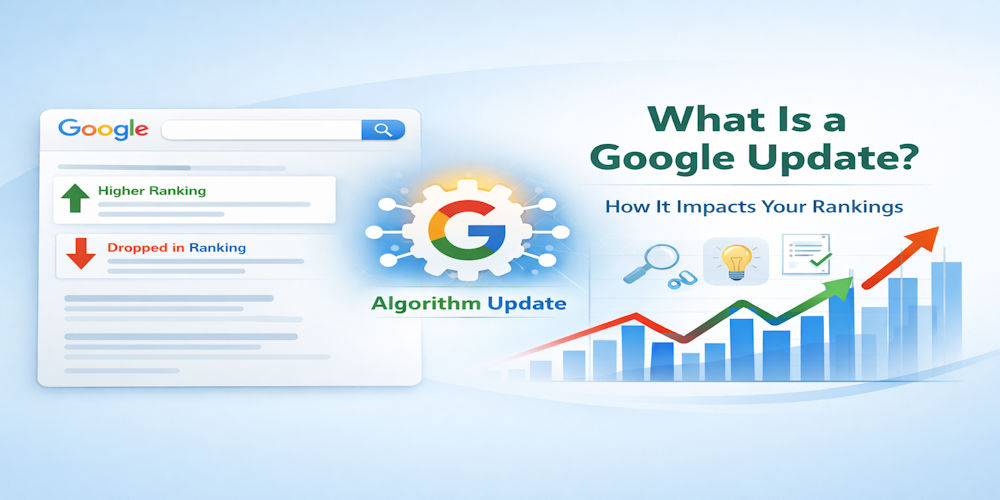
What Is a Google Update and the Purpose of These Changes? If you have ever published a website, run an online business, or worked in SEO, you have probably heard people talk about a “Google update” with a mix of excitement, confusion, and sometimes panic. A Google update is simply a change Google makes to the systems that decide which web pages appear in search results, and in what order. These updates are part of Google’s ongoing effort to improve Search so that users are shown the most useful, trustworthy, and relevant information possible. In practice, Google updates can have a noticeable effect on website traffic, search visibility, and rankings. Some updates are small and happen constantly in the background, while others are broad core updates that can shift large numbers of websites up or down in the results. For website owners, this can feel dramatic. For Google, however, these changes are a normal part of keeping Search accurate, helpful, and aligned with how people use the web. Why Google Updates Exist The main purpose of Google updates is to make Search better. Google’s search systems are designed to analyse hundreds of factors to determine which pages are most relevant to a search query. But the web is always changing. New pages are published every second, old content becomes outdated, search behaviour evolves, and some sites try to manipulate rankings instead of earning them. Because of this, Google must constantly refine its systems to keep results useful. That is why updates matter. They help Google: In simple terms, Google updates are about improving the search experience for users, not just reshuffling rankings for the sake of it. The Different Types of Google Updates Not every Google update is the same. Some are subtle and barely noticed, while others can have major effects across many websites. Core updates Core updates are the most talked-about changes because they can affect rankings widely across the internet. These are broad changes to Google’s ranking systems, not penalties against individual sites. A page may lose or gain visibility because Google has changed how it evaluates content quality and relevance overall. Core updates usually do not target one specific issue. Instead, they adjust the way Google judges what content deserves to rank well. That means a page that once performed strongly may drop if other pages are now seen as more helpful for the same search. Spam updates Spam updates focus on reducing manipulative or low-quality behaviour in search results. These updates are meant to stop tactics such as keyword stuffing, link schemes, and other methods designed to game the system rather than help users. Helpful content-related changes Google has also put strong emphasis on content that is made for people rather than for search engines alone. Updates in this area aim to surface pages that demonstrate real experience, usefulness, and originality. In other words, Google wants content that answers a question properly, not content that simply repeats what is already everywhere else. What Happens During a Google Update? When Google rolls out an update, its ranking systems are recalibrated. That means the search engine may begin to interpret relevance, quality, or trust signals differently. A website that used to rank on page one might move down. Another site may rise even if it made no changes at all. This can happen because the update changed how Google weighs factors such as: This is why Google often says that ranking changes after a core update are not necessarily a sign that a site has done something wrong. Instead, the update may simply mean that Google now considers other pages to be better answers for a given query. The Purpose Behind These Changes At the heart of every Google update is the same question: how can Search become more useful? Google’s aim is to help users find information that is: This matters because search results only work if users trust them. If the top results are full of poor-quality pages, misleading content, or heavily optimised pages that do not actually answer the query, the search engine loses value. Google updates are the mechanism it uses to keep search quality high. So, while website owners often focus on the impact to rankings, Google’s broader goal is more straightforward: deliver better answers. The March 2026 Google Update A recent example is the March 2026 core update, which Google completed after a broad rollout that began in late March 2026. This update is notable because it reflects Google’s continuing effort to ensure its search results are helpful and reliable. For many site owners, updates like this can bring short-term volatility. Some websites gain traffic, some lose it, and some remain stable. But the broader message remains the same: Google is constantly refining its ranking systems to reward content that genuinely serves users. That is especially important in 2026, when search competition is intense and the volume of online content is enormous. With so much information available, Google must keep improving its ability to distinguish between pages that are truly valuable and pages that are simply optimised to attract clicks. Why Website Owners Should Care If you run a website, a Google update can affect your visibility almost overnight. That does not mean every drop is a disaster, and it does not mean every gain is permanent. It simply means the search landscape has changed. The best response is not to chase every small ranking shift. Instead, website owners should focus on long-term quality. That includes: Sites that are built for real users tend to be more resilient over time because they align with the direction Google says it wants to move in. A Simple Way to Understand It Think of Google updates as periodic improvements to a giant recommendation engine. Google is constantly trying to decide which pages deserve the top spots when someone asks a question. If the system becomes better at identifying helpful content, searchers get better results. If it becomes worse, users stop trusting Search. That
The Essential Guide to the XML Sitemap

An Introduction to the XML Sitemap An XML sitemap is a powerful tool that should not be overlooked in any effective SEO strategy. At its core, an XML sitemap acts as a roadmap for search engines, guiding them through the important pages of your website and ensuring none are missed during indexing. By listing URLs in a structured format, it makes it easier for search engine bots to crawl your site efficiently, even if your internal linking isn’t perfect. For websites with extensive content or frequent updates, such as e-commerce platforms or news sites, a well-maintained XML sitemap is indispensable. It allows you to highlight new pages and recent changes quickly, helping search engines discover and rank fresh content faster. Moreover, sitemaps can include valuable metadata about each URL, such as when it was last updated or how important it is relative to other pages on your site. Implementing an XML sitemap doesn’t just benefit large websites; even small businesses can see significant improvements in their visibility online. Search engines like Google and Bing actively encourage the use of sitemaps because they streamline the crawling process and reduce the chances of missing key information. In summary, if you’re serious about optimising your website’s SEO performance, investing time in creating and maintaining an accurate XML sitemap is non-negotiable. It’s one of the simplest yet most effective ways to ensure all your hard work gets noticed by both users and search engines alike. Understanding XML Sitemaps: What They Are and Why They Matter If you’re serious about boosting your website’s visibility, it’s crucial to get to grips with XML sitemaps. So, what is an XML sitemap? Simply put, it’s a file that lists all the important pages of your website in a structured format that search engines can easily read. By having xml sitemap explained clearly, you’ll see how this tool acts as a roadmap for search engines like Google and Bing, guiding them through your site’s content. The importance of XML sitemaps can’t be overstated when it comes to search engine indexing. Without one, there’s a risk that some of your key pages might not be discovered or indexed efficiently, especially if your site is large or contains complex navigation. An XML sitemap ensures that every page you want found gets presented directly to search engines, making the indexing process smoother and faster. Moreover, an XML sitemap helps establish a clear website structure for SEO purposes. It highlights the relationships between different sections and pages on your site, which can improve how search engines interpret and rank your content. In short, investing time in creating and maintaining an up-to-date XML sitemap is one of the most effective ways to enhance both discoverability and performance in organic search results. The Key Components of an Effective XML Sitemap An effective XML sitemap is more than just a list of your website’s pages, it’s a strategic tool that ensures search engines can efficiently crawl and index your content. To achieve this, you must pay careful attention to several key xml sitemap elements. Firstly, the sitemap URL structure should be clear and logical. Each URL listed should lead directly to a unique, valuable page on your site, avoiding any redirects or broken links. This clean structure helps search engines understand the architecture of your website and prioritise crawling important pages. Incorporating priority tags in sitemaps is another essential step. These tags signal to search engines which pages are most significant within your site hierarchy, guiding them to focus their efforts where it matters most. While these tags don’t guarantee crawling order, they provide useful hints about the relative importance of each page. Update frequency in sitemaps (the “ tag) tells search engines how often each page is likely to change. By accurately setting this value, whether daily for news sections or monthly for static content, you help ensure that fresh updates are discovered promptly without wasting crawl budget on rarely updated pages. Lastly, always include the lastmod tag in your XML sitemap. The “ tag specifies when a page was last modified, enabling search engines to identify new or updated content quickly and keep their indexes current. By optimising these components, sitemap URL structure, priority tags in sitemaps, update frequency in sitemaps, and the lastmod tag xml sitemap, you give your website the best chance of being thoroughly crawled and accurately represented in search results. How to Create and Submit Your XML Sitemap Creating and submitting your XML sitemap is a crucial step towards ensuring your website is fully indexed by major search engines. Start by creating an XML sitemap, which acts as a roadmap of your site’s pages for search engine crawlers. You can generate an XML sitemap online using various free and paid tools that automatically list all relevant URLs from your website, saving you valuable time and reducing the risk of missing important pages. Once you’ve generated your XML sitemap, it’s vital to submit it to platforms like Google Search Console and Bing Webmaster Tools. For Google, simply log in to Search Console, select your property, navigate to the ‘Sitemaps’ section under ‘Index’, then paste the URL of your newly created sitemap and click ‘Submit’. For Bing, access Bing Webmaster Tools, go to ‘Sitemaps’ under ‘Configure My Site’, enter the sitemap URL and submit. To streamline this process further, consider automating XML generation with plugins or scheduled scripts, especially if you regularly update or add new content. Automating ensures that search engines always have access to the latest version of your site structure without manual intervention. By taking these steps, creating an accurate sitemap, submitting it promptly through official channels, and automating updates, you’ll significantly improve your website’s visibility in search results. Best Practices for Maintaining and Updating Your XML Sitemap A well-maintained XML sitemap is crucial for ensuring that search engines can efficiently crawl and index your website. To keep your sitemap working optimally, follow these essential sitemap maintenance tips. First, make updating sitemaps regularly a priority, especially if your
Keyword Driven Internal Links

Keyword‑driven internal links are one of the simplest, most effective ways to improve your SEO and help users find the right content on your site. This post explains what they are, why they matter, and how to use them properly. What Are Keyword Driven Internal Links? Internal links are links from one page on your website to another page on the same domain.Keyword‑driven internal links are internal links where the clickable text (anchor text) is built around the main keyword or topic of the destination page. Instead of using vague anchors like “click here” or “read more”, you use descriptive, keyword‑focused phrases such as: This anchor text tells both users and search engines what they can expect when they click the link, and it reinforces the relevance of the destination page for that keyword. Why Keyword‑Driven Internal Links Matter For SEO 1. They Help Search Engines Understand Your Content Search engines use internal links to discover pages and to understand how topics are related. When your links use clear, descriptive keywords: Put simply, keyword‑driven internal links act as labels that explain each page’s purpose. 2. They Distribute Authority To Important Pages Some of your pages naturally attract more authority (links, visibility, traffic) than others – for example, popular blog posts or digital PR pieces. Internal links let you pass some of that authority to other key pages, such as: By linking to these pages with relevant keywords, you “tell” search engines that these pages are important. Over time, this can help them rank better for those terms. 3. They Improve User Experience Good keyword‑driven internal links are also useful for visitors: That combination of better engagement and clearer navigation is positive for both users and SEO. Best Practices For Keyword‑Driven Internal Links 1. Use Descriptive, Natural Anchor Text The anchor text should: Examples: Avoid: 2. Vary Your Anchor Text Using the exact same keyword every time you link to a page can look unnatural and spammy. It’s better to use a mix of: All of these still send strong topical signals, while keeping your link profile natural. 3. Link To Relevant Content Only Relevance is crucial. Every internal link should make sense in context and genuinely help the reader. Ask yourself: If the answer is no, don’t force the link. 4. Support Topic Clusters And Pillar Pages Keyword‑driven internal links work especially well when you organise your content into topic clusters. For example: You can then: This hub‑and‑spoke structure helps search engines see that you cover the topic in depth, and it guides users through related content. 5. Prioritise Your Most Valuable Pages Not every page on your site is equally important. Identify: Make sure these pages receive a good number of internal links with strong, relevant anchor text from across your site. When you publish new content, look for natural opportunities to link back to these priority pages. 6. Avoid Over‑Optimisation As with any SEO tactic, it’s possible to overdo keyword‑driven internal links. Avoid: A sensible approach is to: A Simple Workflow For Adding Keyword‑Driven Internal Links You don’t need complex tools to get started. Here’s a straightforward process you can follow when creating or updating content. How Keyword‑Driven Internal Links Help Your Business Done properly, keyword‑driven internal linking delivers several benefits: For local and service‑based businesses, this can be the difference between a blog that just “gets traffic” and a site structure that actually generates qualified leads and enquiries. Being skilled at keyword research is essential for making your SEO strategy better. When you understand search intent and relevance, choose the right keywords, and use them well in your content, you can boost your online visibility. This will help you connect more effectively with your audience. Start your keyword research journey today. This can help you create a solid foundation in digital marketing. If you feel we could help you with your Local SEO project or a ‘wider SEO’ project then plese get in touch with us by calling 01207 283878 or drop us a line using our web contact form. We are a friendly bunch and our Our aim is simple – to help you bring in more customers online. Whether you want to stand out locally or across the UK, here at Direct Submit we know how to get you seen”
Guide to Managing Expectations in SEO

Importance of Managing Expectations in SEO Welcome to the world of Search Engine Optimisation (SEO)! If you’re looking to grow your business online, a smart SEO strategy is a must. It helps you climb the search engine rankings and attract more customers. As a specialist Digital Marketing agency with over 20 years of experience, we know that managing expectations is just as important as the strategy itself. This guide will walk you through how to set and manage realistic goals for your SEO journey, ensuring a smooth and successful partnership. Managing client expectations is a crucial part of any Search Engine Optimisation campaign. When everyone understands what can be achieved and the timelines involved, it creates a positive and productive working relationship. This understanding forms a foundation of trust, which is vital for long-term success. Setting realistic expectations from the beginning prevents misunderstandings later on. A clear SEO strategy, with achievable goals, ensures that both the agency and the client are aligned. This approach helps everyone focus on what truly matters: driving real results and growing your business online. Why Setting Expectations Matters for Agencies and Clients For marketing agencies, clearly defining what SEO can deliver is essential. It helps you demonstrate the value of your work and builds credibility. When SEO clients understand that results take time and effort, they are more likely to appreciate the progress being made, even if it’s not an overnight success. From the client’s perspective, having realistic expectations means you can better plan your marketing budget and business strategy. You’ll understand that SEO is an investment in sustainable growth, not a quick fix. This knowledge helps you trust the process and the professionals you’ve hired. Ultimately, an open dialogue about expectations builds a strong partnership. It creates a foundation of trust where both parties feel heard and respected. This collaborative environment is where the most successful SEO campaigns are born, leading to better results and long-term relationships. The Impact of Clear Communication on SEO Success Effective communication is the backbone of SEO success. When agencies and clients talk openly and regularly, it ensures everyone is on the same page. It helps to track progress, discuss challenges, and celebrate wins together. Without this, misunderstandings can arise, leading to frustration. At Direct Submit, we prioritise consistent and transparent communication. This means you are always informed and supported at every stage. We believe this is key to building a strong partnership and achieving your goals. Clear communication helps to: This approach ensures that your journey to the top of search results is a collaborative one. By keeping you in the loop, we can make smarter decisions together and drive the sustainable growth your business needs to thrive. Common Misconceptions and Unrealistic SEO Expectations Many people have misconceptions about SEO, which can lead to unrealistic expectations. One of the most common is believing that you can get to the top of search engine results overnight. Unfortunately, this can set SEO campaigns up for failure before they even begin. These unrealistic hopes can create pressure for quick fixes that don’t deliver long-term value. It’s important to understand what SEO can and can’t do. Let’s look at some of these common myths and set the record straight so you can approach your SEO strategy with a clear and realistic mindset. Instant Results: Why SEO Takes Time One of the biggest myths in digital marketing is the idea of instant results from SEO. The truth is, search engine optimisation is a long game. It involves making strategic improvements to your website and building authority, which doesn’t happen overnight. Search engine algorithms are complex and need time to recognise and reward your efforts. Your SEO efforts start building momentum over weeks and months. You might see some small wins early on, but significant increases in organic traffic and rankings typically take anywhere from four to twelve months. This is because you are competing against other websites that have been established for a long time. Think of it like planting a garden. You wouldn’t expect to see a fully grown tree the day after you plant a seed. SEO works in a similar way; consistent effort and patience are required to see your online presence grow and flourish. Guaranteed Top Rankings: Separating Fact from Fiction You might come across agencies that promise guaranteed results, like a number one spot on Google. This is a major red flag. Reputable SEO professionals will never make such a promise because it’s impossible to guarantee search engine rankings. Google’s algorithm is constantly changing, and no one has complete control over it. These unrealistic expectations are often used as a sales tactic for “quick SEO” services that can sometimes do more harm than good. True SEO is about applying best practices consistently to earn better rankings over time. There are no shortcuts or magic tricks. So, why do we avoid making these guarantees? Because our focus is on delivering real, sustainable growth. We build strategies designed to perform based on proven methods, not empty promises. This transparent approach ensures you understand that success comes from a well-executed, long-term plan. The Challenges of Aligning Client and Agency Perspectives Aligning SEO client expectations with what marketing agencies can realistically deliver can be challenging. Clients often focus on immediate outcomes like top rankings or a sudden jump in sales. However, agencies know that SEO services work by building a solid foundation for long-term growth, which includes improving things like website traffic and conversion rates over time. This difference in perspective requires careful management. It’s an agency’s job to bridge this gap by educating clients and setting clear, measurable goals from the start. Let’s explore some of these challenges and how to navigate them effectively for a successful partnership. Typical Client Concerns and How to Address Them Many SEO clients share similar concerns, especially when they are new to the process. They often wonder why their search rankings aren’t improving faster or why they aren’t seeing an immediate increase in leads.